
Four Hundred Years of Making,
One Workshop, One Family
The History Of Paper Is Related To The History Of Human Culture And Civilization. The Egyptians, The Greeks, And The Romans Wrote On "Papyrus", A Paper-like Material. Today's Paper Was First Developed And Used In China. This Paper Was The Most Important Carrier Of Information In The Past Since Its Birth. There Was A Need To Increase The Population And Transfer Knowledge, Education, And Information To Society On A Large Scale, Which Were The Factors That Forced Paper Growth For A Great Increase. Paper Was A Valuable Product In Earlier Times And Papermaking Became An Art Which Was Often Kept Secret Because Of The Outstanding Benefits Of The Product. Handmade Paper In India Goes Back As Far As The Third Century BC. Handmade Papermaking Is A Traditional Art That Has Been Practised For Generations Together By People Of A Particular Class. This Art Has Been Passed From One Generation To Another Generation Of Artisans.
CHAPTER 1 - THE ANCIENT STORY OF PAPER
Paper Began as a Secret
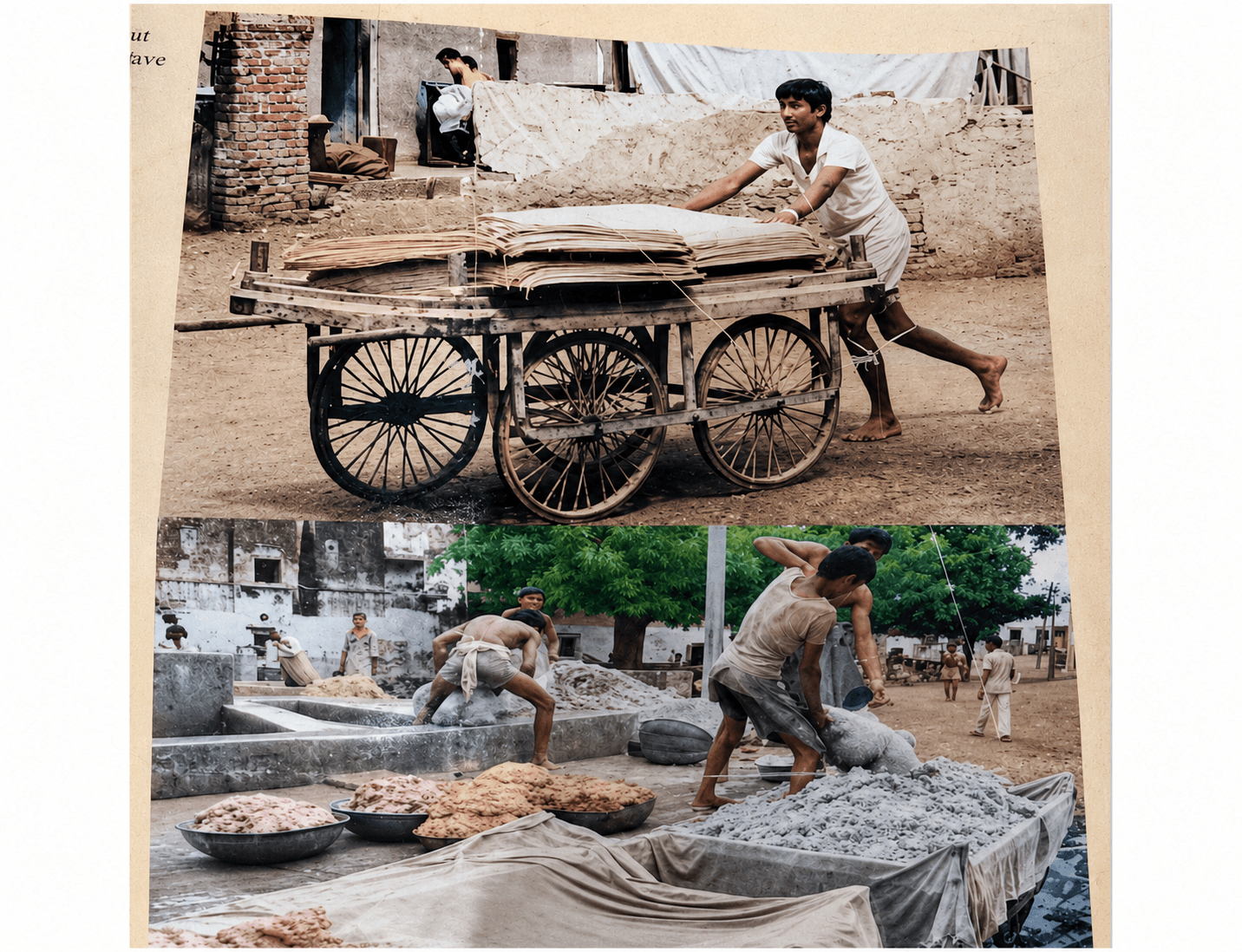
These artisans are known as "Kagzi's". The name is derived from the Urdu word 'Kavas', which means paper. The size of this community has decreased in the last few years. There is a small area of 'Kagzi' in Sanganer near Jaipur, where a section of this community had settled thousands of years ago.
The 'Kagzi' community in Sanganer is the primary owner of the handmade paper industry in the town. Our history goes back to the 14th century when ruler Firoze Shah Tughlaq was there.
Even in those days, handmade paper made by them was used to make copies of official documents, miniatures, calligraphy and Holy Quran, and to maintain account books.
CHAPTER 2 - THE KAGZI COMMUNITY
A Community Named After the Thing They Made
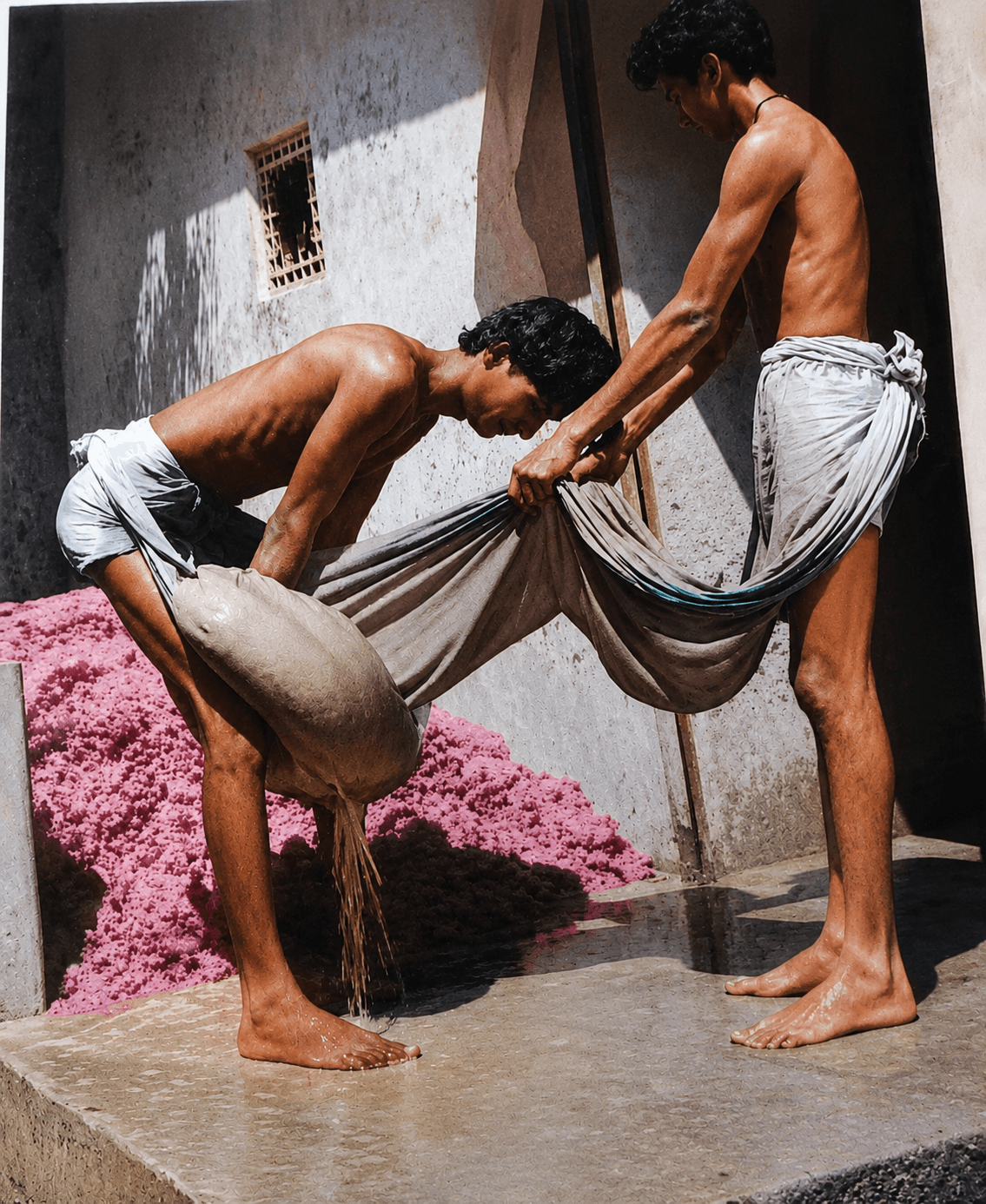
In the 16th century, Raja Man Singh, the then ruler of Ambar, brought the Kagzi in Sanganer and settled them on the banks of Saraswati river, where clear water was easily available.
Thus, this city has emerged as one of North India's largest paper producing centers.
TIMELINE
How We Got Here
1980
Paper-making begins at home. The Kagzi family tradition continues through hands-on practice in the domestic setting.
1990
Growth into part-manufacturing. The operation expands beyond the home. Skills deepen. Product range broadens.
1st January 2000
Century Papers is formally founded as a dedicated paper factory in Sanganer, Jaipur.
2006
International export begins. Paper and paper products reach buyers in their first overseas markets.
2010
Product range expands significantly to include leather journals, leather bags, plantable seed paper, honeycomb décor, and lampshades.
2020
Century Papers deepens its global footprint and digital presence, reaching buyers across 20+ countries. Export volumes grow consistently despite global supply chain disruptions. The workshop invests in expanded production capacity, new product categories, and direct international trade removing intermediaries to build tighter relationships with buyers worldwide.
Present
120+ craftspeople. 200,000 sheets per month. 20+ export markets. ₹25 Crore annual turnover. One family. One craft.
TRADITIONAL KNOWLEDGE
What Cannot Be Taught in a Classroom
The knowledge held by our craftspeople is not the kind that can be captured in a manual or replicated by a machine.
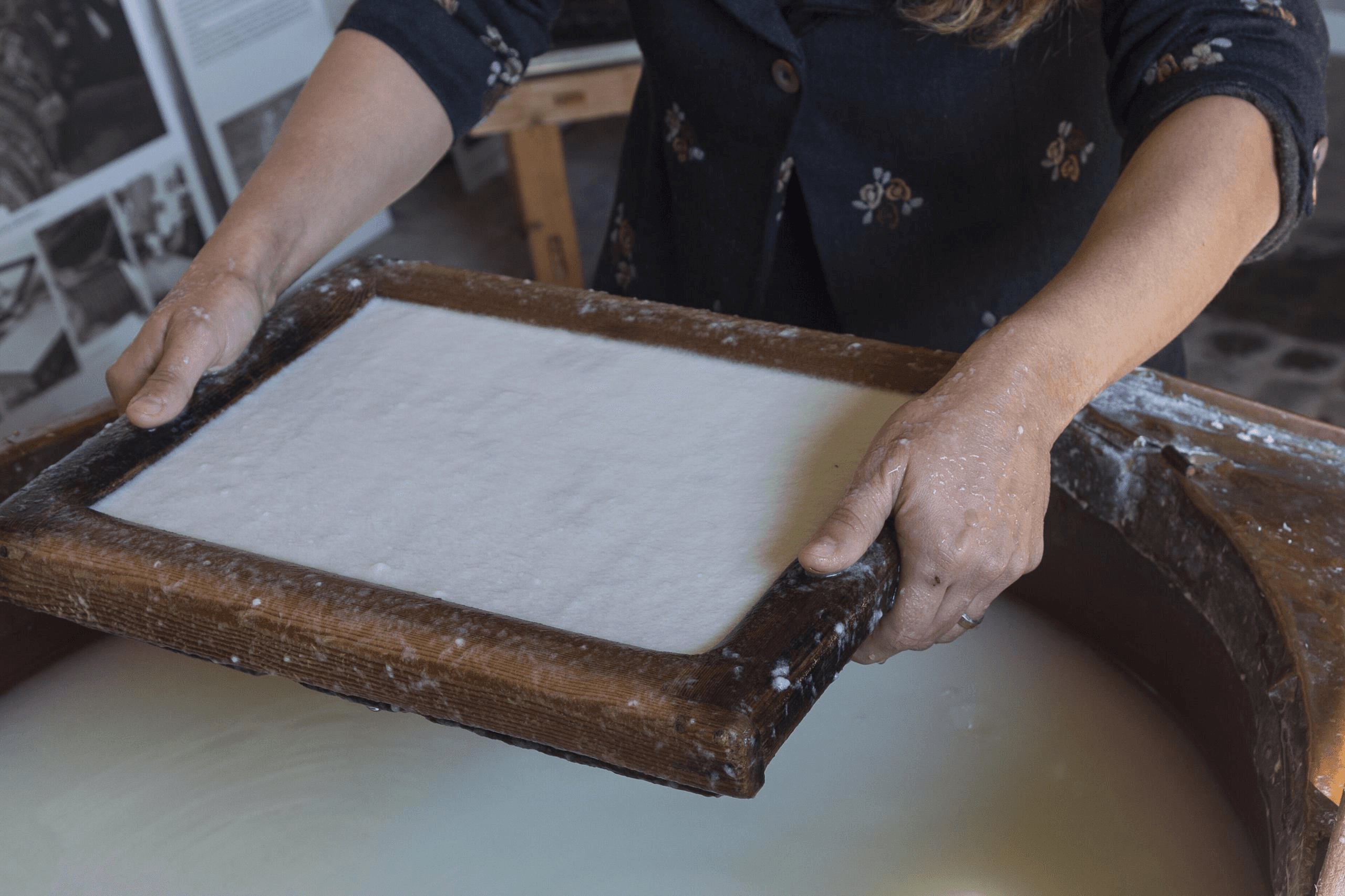
It is knowledge of material behaviour how cotton pulp responds to temperature and humidity, how the deckle should be held during the drain, how much pressure to apply when couching, how to read the surface of a drying sheet and know when it is ready to be lifted.
This knowledge has been passed from artisan to apprentice for generations.
It lives in hands, not books. It is irreplaceable and it is the single most important reason that the paper and goods we produce are categorically different from anything that comes off an industrial line.
We are grateful for it every day.